Transitional Vocational Training (TVT)

A meaningful next step between school and employment.

TVT is designed to empower young adults to discover their potential, build independence, and develop the skills necessary to become active, contributing members of their communities.

Ready for work, and for more independence

The Transitional Vocational Training (TVT) Program was created to help young adults with intellectual and developmental disabilities prepare for meaningful employment and increased independence in their communities. Through a combination of classroom instruction, hands-on learning experiences, community-based training, and workplace exposure, participants develop the skills and confidence needed to pursue future employment opportunities.

The program focuses on building both practical job skills and essential life skills that support long-term success in the workplace. Participants receive individualized support and guidance while learning the expectations and responsibilities of employment.
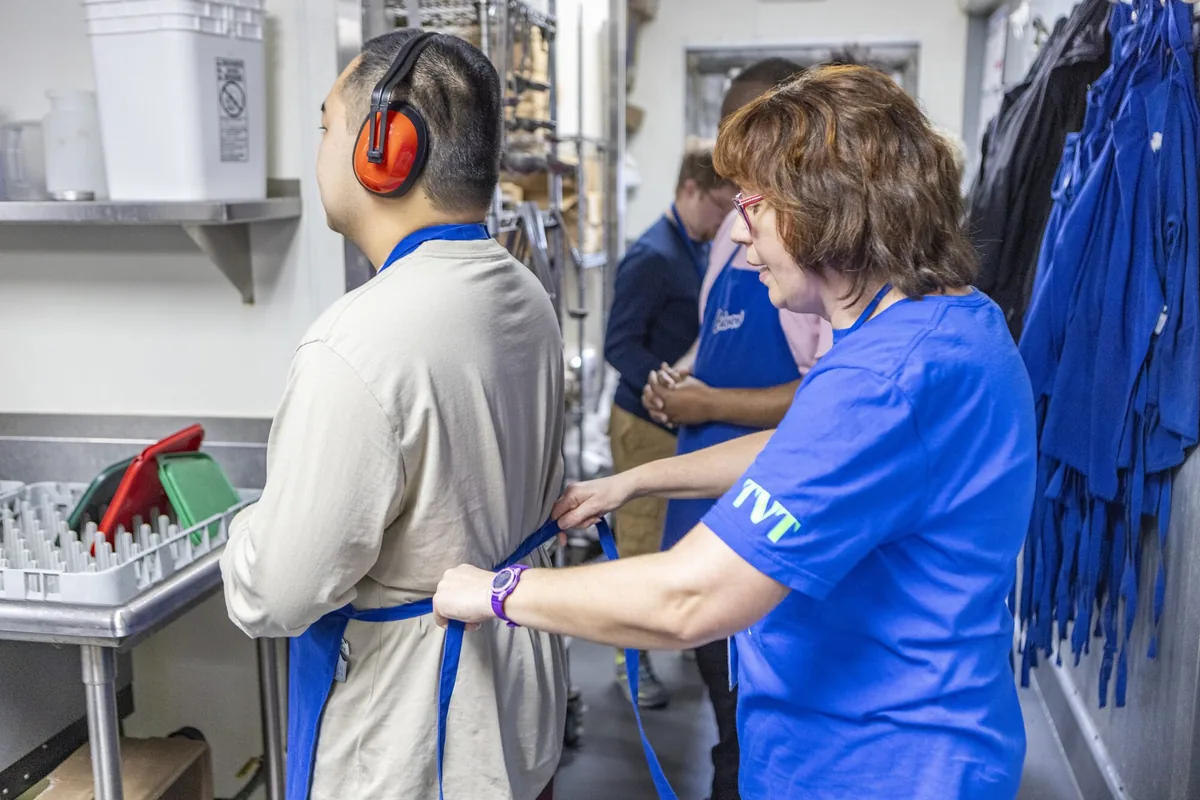

A staff member in a blue TVT shirt ties the apron of a young man wearing orange ear protection in a kitchen
Dailystructured lessons and workplace outings
Who TVT is for

The Transitional Vocational Training (TVT) Program serves young adults with intellectual and developmental disabilities who are interested in increasing their independence, developing workplace skills, and preparing for future employment opportunities. TVT is designed for individuals who:

  • have completed traditional school-based services, or are transitioning into adulthood
  • are looking for a structured environment that focuses on career exploration, skill development, and community involvement
  • want to learn more about the world of work but may need additional support, guidance, and hands-on experience before entering competitive employment
  • learn best through real-world experiences and hands-on activities
  • may need to strengthen communication skills, social interactions, self-advocacy, problem-solving abilities, and professional behaviors
Why families choose TVT

Families often choose TVT because it provides a meaningful next step between school and employment. Participants benefit from:

  • a structured daily schedule
  • individualized support
  • opportunities for community inclusion
  • exposure to a variety of career paths

Participants have opportunities to practice workplace expectations, interact with community members, develop independent living skills, and apply what they learn in classroom settings to actual work environments.

At the same time, families gain confidence knowing their loved one is developing valuable life and vocational skills in a safe, supportive, and encouraging environment.

Key areas of instruction

TVT follows a rigorous, structured lesson plan daily, including workplace outings that all participants follow to obtain real-life and workplace skills.

Resume development

Participants learn how to create professional resumes that highlight their strengths, skills, experiences, and accomplishments.

Mock interviews

Practice interviews help participants develop confidence, improve communication skills, and learn how to appropriately respond to common interview questions.

Job skills training

Participants are introduced to workplace expectations, task completion, time management, organization, and professional behavior.

Social skills development

Instruction focuses on effective communication, teamwork, problem-solving, conflict resolution, and appropriate workplace interactions.

Employability skills

Participants learn workplace etiquette, responsibility, punctuality, adaptability, self-advocacy, and other skills that employers value.

On-the-job training

Real-world work experiences allow participants to apply skills in actual workplace environments while receiving support and guidance.

Team-building experiences

Group activities help participants develop collaboration, leadership, communication, and cooperative problem-solving skills.

Job exploration and exposure

Participants gain exposure to a variety of career fields and business settings, helping them identify interests and potential career paths.

Food safety

Participants build food safety skills while running a weekly café cart.

A young man in a black coat waves as he leads a group across a snowy parking lot, a white van behind them

Learning in the community

A major component of the TVT program is community-based learning and volunteer experiences.

These opportunities allow participants to practice workplace skills while giving back to their community. Community outings are structured around learning and service and may include:

  • Assisting with sorting, organizing, and processing donations at Goodwill
  • Participating in various job-training activities at local businesses such as Culver's
  • Helping serve and assist at a monthly senior luncheon
  • Supporting operations at TradeWinds' Food Pantry and other mobile food pantry programs
  • Participating in educational tours and job-shadowing opportunities at local businesses and organizations, including manufacturing facilities, grocery stores, automotive dealerships, and other community employers

More than a job search

In addition to employment preparation, TVT encourages participants to explore entrepreneurship.

Entrepreneurship

Learning how a business runs

Through entrepreneurial activities, individuals learn about:

  • Creativity
  • Innovation
  • Product development
  • Customer service
  • Budgeting
  • Marketing
  • Business operations

These experiences help participants understand alternative career pathways while developing confidence, leadership skills, and independence.

Staff support

Coaching at every step

Staff provide individualized coaching and encouragement while helping participants identify their strengths, interests, and personal goals. The program recognizes that every individual progresses at their own pace and focuses on building confidence through positive experiences and achievable milestones.

Certified in First Aid, CPR, and Crisis Intervention, staff members assist with feeding, personal care, hygiene, and behavioral support based on the individualized plans in place for each participant. Case managers are assigned and on-site for any additional support needed by either the individual or family.
CARF Accredited seal

CARF accredited

TradeWinds holds a three-year CARF accreditation that extends through June 30, 2027.

How to get started

It starts with one call to Admissions.

  1. Call Admissions

    Reach out to TradeWinds Admissions at (219) 945-0100 ext. 332 to start a conversation about TVT.

  2. Check where you stand with Vocational Rehabilitation

    TVT is for consumers who are a Vocational Rehabilitation non-participant, have an open Vocational Rehabilitation case, or had an unsuccessful Vocational Rehabilitation closure.

  3. Tour TVT

    We encourage every family to tour before starting. You can request a tour any weekday between 9 am and 2 pm.

TVT questions

Call Admissions with any other questions, weekdays at (219) 945-0100 ext. 332.

Contact us
Who is TVT for?

TVT is designed for individuals who have completed traditional school-based services or who are transitioning into adulthood. They are looking for a structured environment that focuses on career exploration, skill development, and community involvement.

Does my family member need to be in Vocational Rehabilitation?

No. TVT is for consumers who are a Vocational Rehabilitation non-participant, have an open Vocational Rehabilitation case, or had an unsuccessful Vocational Rehabilitation closure.

What comes after TVT?

Whether an individual plans to pursue community employment, volunteer opportunities, supported employment services, or entrepreneurial ventures, TVT provides the foundation needed to move toward those goals.

Does everyone move at the same pace?

No. The program recognizes that every individual progresses at their own pace and focuses on building confidence through positive experiences and achievable milestones.

Can we tour TVT before enrolling?

Yes. We encourage every family to tour before starting. You can request a tour any weekday between 9 am and 2 pm.

See TVT in person

Call Admissions at (219) 945-0100 ext. 332, or schedule a tour and see TVT for yourself.